The seventh essay
The hermits
The monasteries were not the beginning. Long before a wall was raised on any summit, men were living alone in holes in the rock below.
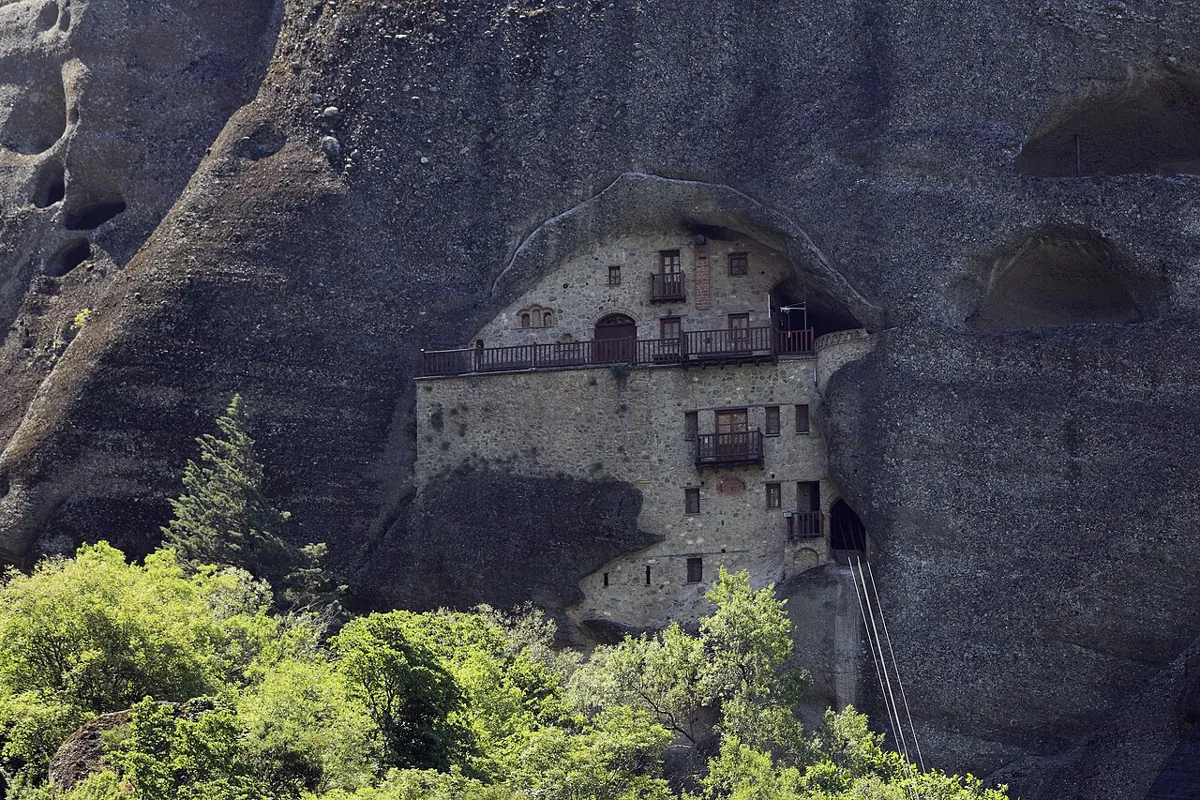
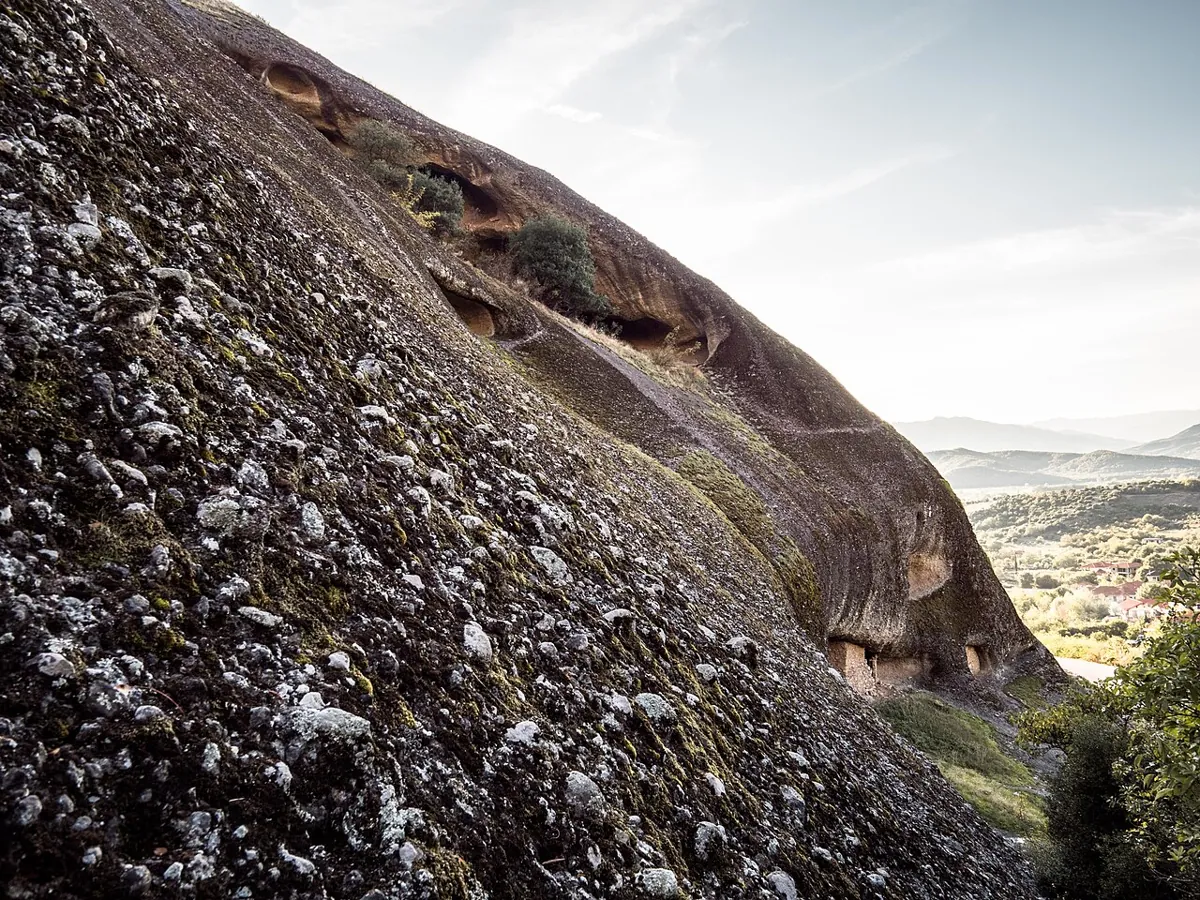
The rocks of Meteora are full of holes. Some are the work of water and weather, and many more were cut or widened by hand. Monks are recorded in the caverns as early as the eleventh century, some three hundred years before the first of the great houses was founded on a summit. Robert Curzon rode in across the plain and saw the caves before he saw a monastery.
“At the foot of many of the rocks which surround this beautiful grassy amphitheatre, there are numerous caves and holes, some of which appear to be natural, but most of them are artificial; for in the dark and wild ages of monastic fanaticism whole flocks of hermits roosted in these pigeon-holes. Some of these caves are so high up the rocks that one wonders how the poor old gentlemen could ever get up to them.”
In the house, at this hour
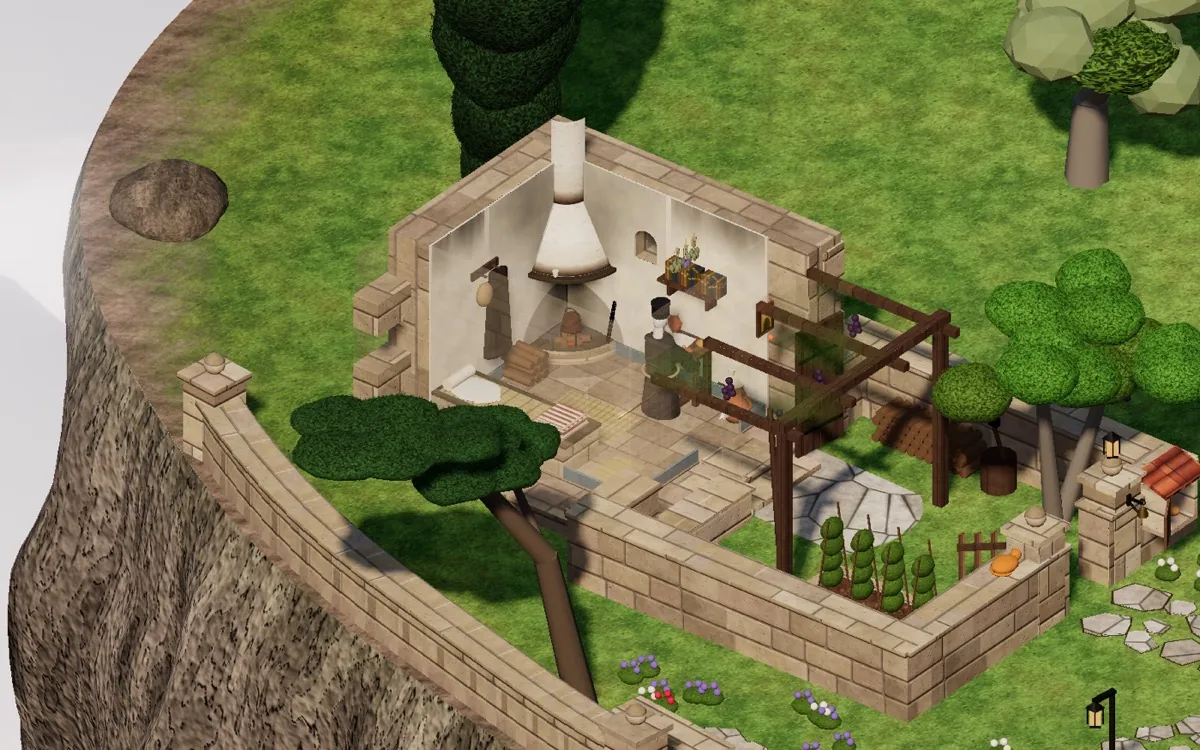
The old hermits' house
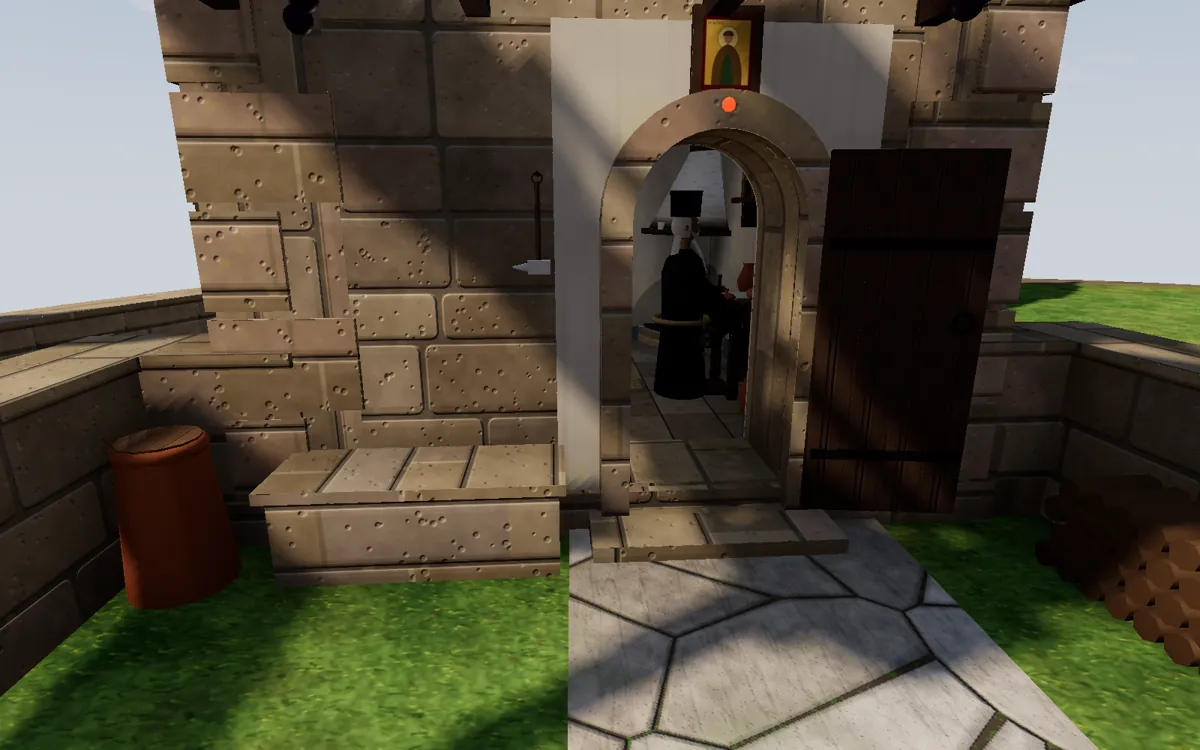
One low limewashed cell with a walled yard at the west end of the ledge, where Father Onouphrios keeps the hours alone. He keeps silence; the yard is as near as guests come.
Stand there now ›Peace be with their memory
Curzon was a man of his century and his church, and the hermits baffled him. He could not see, he wrote, by what reasoning they had persuaded themselves that they were leading holy lives. He set down what the old pictures showed of them: gowns of coarse matting, long beards, chains and iron girdles on wasted bodies.
“They wore out the rocks with their knees in prayer; the cliffs resounded with their groans; sometimes they banged their breasts with a big stone, for a change.”
And then, in the same paragraph, he turns round.
“Still there is something grand in the strength and constancy of their faith. They left their homes and riches and the pleasures of this world, to retire to these dens and caves of the earth, to be subjected to cold and hunger, pain and death, that they might do honour to their God, after their own fashion… and therefore peace be with their memory!”
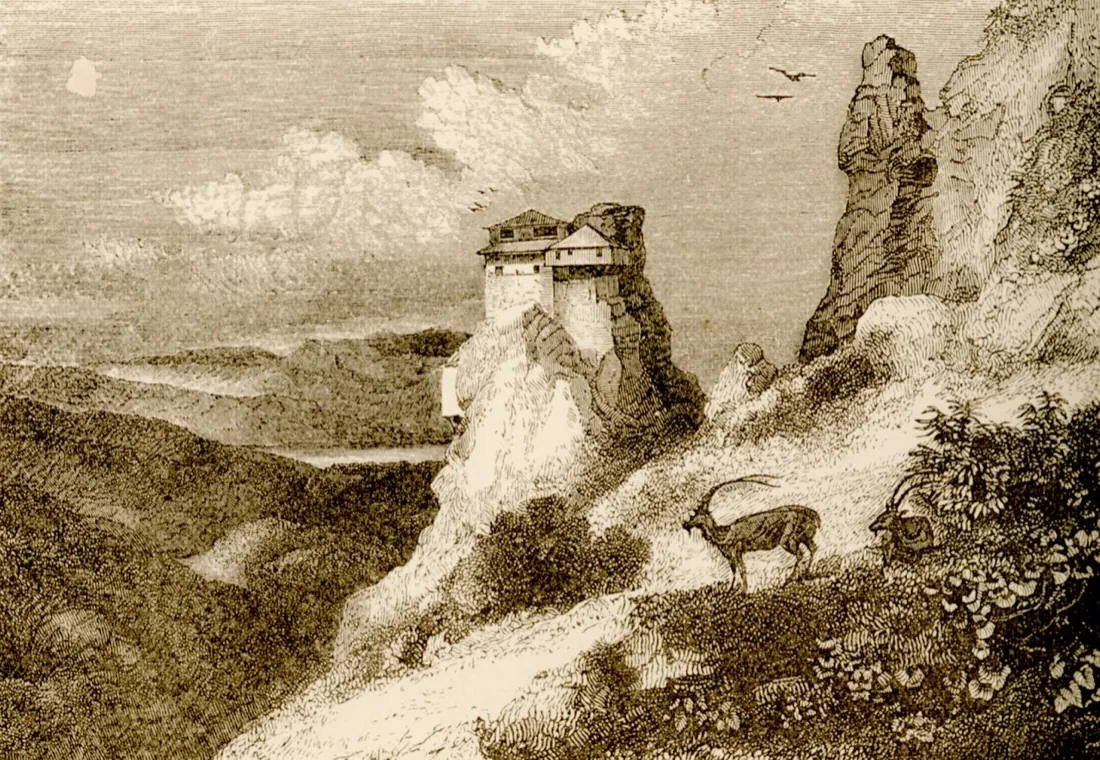
From the caves the hermits went up. On the tops of the rocks, he goes on, there remained in his day seven monasteries out of twenty-four which once crowned their heights.
The one who stayed below
The Sky Monastery remembers the same beginning. On the vineyard ledge, below the church and the bell tower, stands the oldest dwelling of the house: the little place where the first hermits lived before anything was built on the summit. The council asked for it to be restored as they had it, with one cell, a hearth and an icon corner. A walled yard lies before it, with a niche in the wall for bread.
A hermit lives there now. Father Onouphrios keeps the hours of the house's day alone, and he does not speak. He is not forgotten. The porter carries bread down to the niche every second day, and the spiritual father of the house goes down to visit him every seventh.
The way to him is the hermits' path: flags laid in the grass across the ledge, past cypresses, olives and almonds, with lanterns for the dark and a wayside shrine of St John the Forerunner where it forks. In the face of the rock above are older places still, among them a cave that bears the name of St Athanasios.
In the house, at this hour
The hermits' path
The old way of the hermits across the ledge, to a wayside shrine of St John the Forerunner where it forks.
Stand there now ›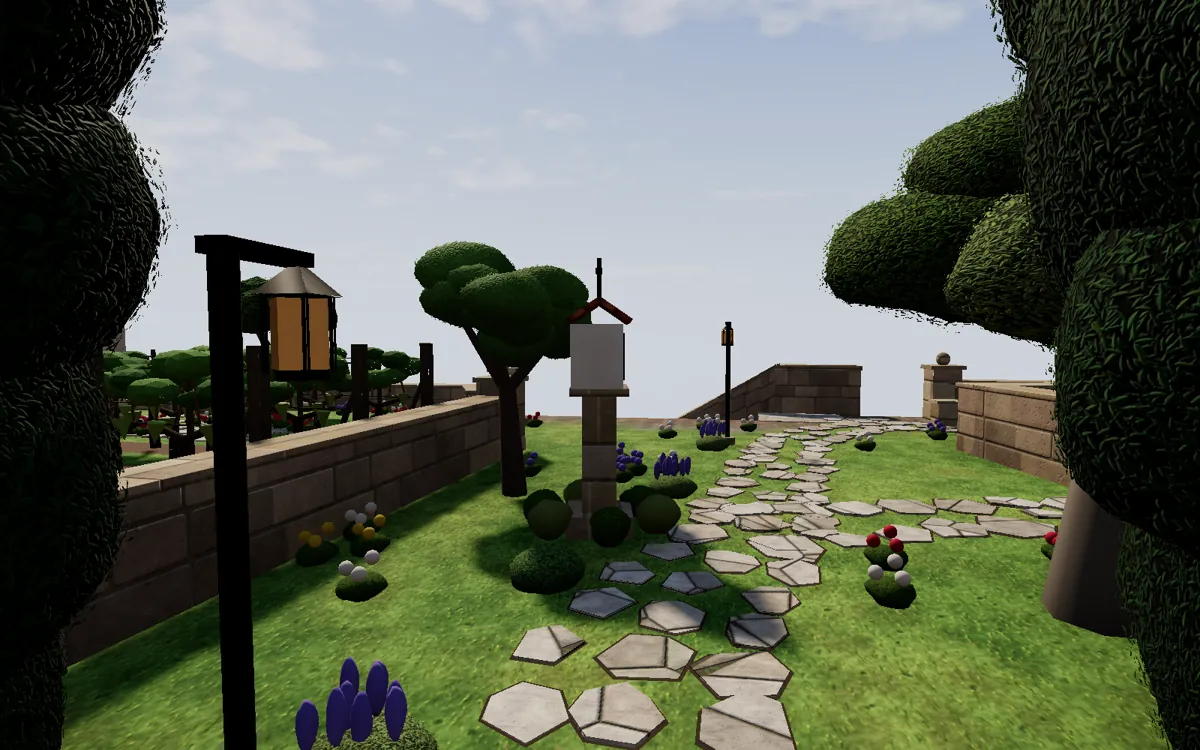
What is invented. The old hermits' house, Father Onouphrios, the bread in the niche and the hermits' path belong to the Sky Monastery. The caves of Meteora and the men who lived in them are real, and Curzon's opinions of them are his own.
Where this comes from. Robert Curzon, Visits to Monasteries in the Levant (London, 1849), chapter XIX, pp. 279–281, in the public-domain scan at the Internet Archive. That monks lived in the caverns as early as the eleventh century is from the article on Meteora at Wikipedia, and wants a better source.
 The next essayThe year ›A feast kept on a mountain top, the fasts, the vintage and the snow.