How time is kept in the house
The calendar, the clock and the seasons
The house never stops. A day there passes in one hour of yours, and a whole year, with its fasts, its feasts and its snow, in about a day.
The hour now
—The hour is read from the house itself when it answers.
The house keeps one clock for everyone. Whoever walks in finds the same hour, the same brethren at the same work, and the same weather. It cannot be paused or hurried.
The clock
One day of the house is one hour of the world's. Its twenty-four hours run evenly, two and a half minutes each, so the noon meal is never more than an hour away.
The brethren sleep from nine at night until five. Once every brother is in his cell and still, the night passes twelve times faster, and it slows to its proper pace again when the first of them must rise. A guest who walks in during the night finds the lamps lit, the gate barred behind him, and not long to wait for the semantron that calls the house to Orthros.
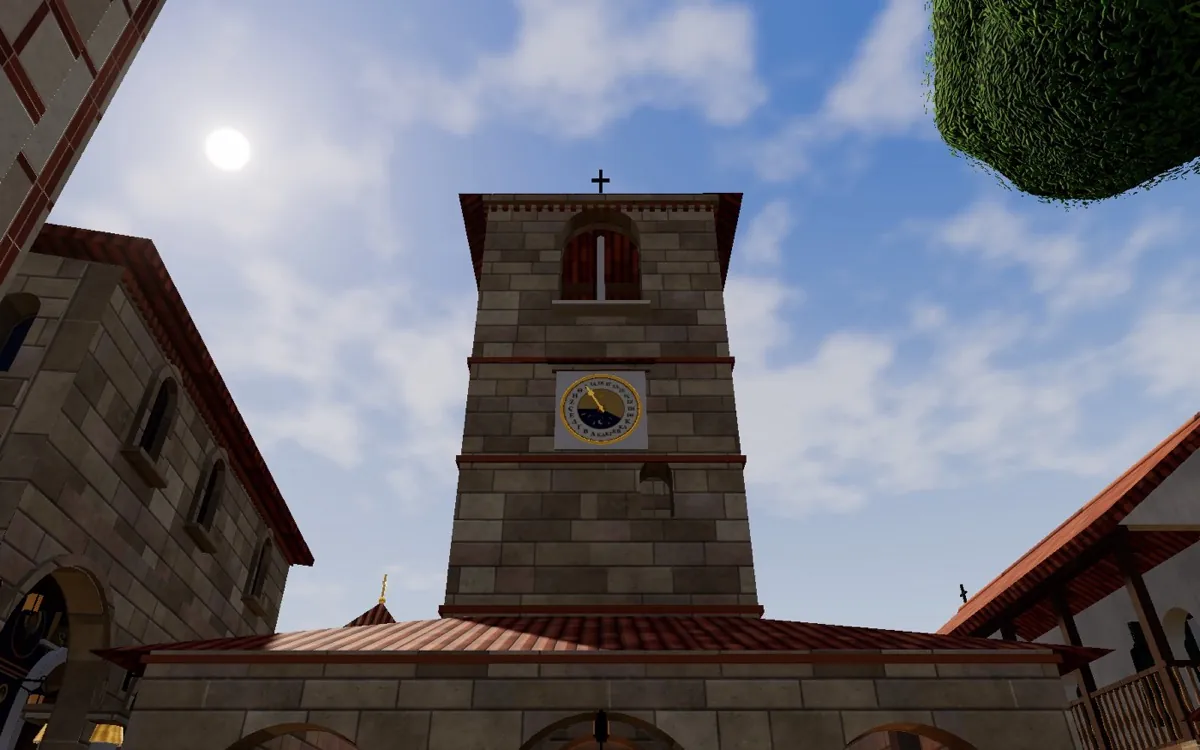
The house's own clock stands halfway up the bell tower, in the chandler's ringing chamber. Weights of field stone drive its wheels, a verge and foliot keep its beat, and it strikes every hour on its little bell. The chandler winds it each morning on the orders of the Church Book. If nobody winds it, it runs down and stops, and the dial on the tower's north face stops with it.
In the house, at this hour
The house clock
Stand at the hour stone in the north square, where the dial is read, and set your own watch against it.
Stand there now ›The day
The day is hung on the hours of prayer, with the council, the two meals and the work of each office between them. These are the hours the founders gave the house for its first morning. The council may move an hour, and does: when the house answers, the list below is today's, as the Rule now stands.
- Orthrosto 07:30
- Liturgyto 08:36
- Synaxisto 11:45
- Trapezato 12:36
- Vespersto 18:18
- Supperto 19:06
- Complineto 20:56
- Nightto 05:00
Orthros and the Liturgy are sung in the katholikon, and Vespers and Compline close the day there. The Synaxis is the council of the house, which sits in the synodikon and decides what changes. Trapeza is the noon meal and Supper the evening one, both in the Great Hall, where the abbot presides from the table in the apse. The bells and the iron semantron call each hour a little before it begins.
The year
The house keeps a short year of twenty-eight days: four weeks of seven, the first day a Monday. Each week is a quarter of the church year, so a day of the house stands for about a fortnight of the world's calendar, and the great feasts fall where the Church keeps them. When the twenty-eighth day is kept the year turns and the first comes round again.
6 The Transfiguration · 7 The Dormition · 1 the Apostles' fast · 5 the Dormition fast
8 The Church New Year · 9 The Elevation of the Cross · 14 the Nativity fast
17 The Nativity · 18 The Theophany · 20 St Tryphon · 15–16 the Nativity fast · 21 Great Lent
24 The Annunciation · 25 Pascha · 28 Pentecost · 22–23 Great Lent
A feast is named in its day.fast: no wine is drunk at table.The day outlined in gold is today in the house.
Fasts, feasts and the table
Every Wednesday and Friday is a fast, and so are the days before the great feasts: the Apostles' fast, the Dormition fast, the Nativity fast and Great Lent. On a fast day the house keeps the fast at table and no wine is drunk. On the other days wine is carried up from the cellar under the rock. A feast breaks the fast of the day it falls on: the Nativity falls on a Wednesday and is kept as a feast, and in Great Lent the Annunciation alone lifts the fast for a day.
The church day begins at Vespers, so a feast is first kept on the evening before it. The Transfiguration is the house's own feast, for its church is dedicated to it. At its vigil the first grapes are blessed, and the vintage opens.
The seasons of the work
The vineyard and the kitchen garden keep the same year, and the brethren's work follows it.
| Days | In the vineyard | In the kitchen garden |
|---|---|---|
| 1–5 | Tending. The rows hoed, the canes tied, the leaves thinned, the hives tended. | Planting out. Seedlings set in the beds, the bean canes put up. |
| 6–9 | The vintage. The grapes picked, carried to the winery and trodden in the vats. | The garden's plenty. Greens and beans every day, the first apricots and figs. |
| 10–11 | Pressing. The must pressed into the casks; the first of every pressing set aside for the altar. | |
| 12–16 | The new wine. The wine settles and is racked in the cellar; the rows are dug and manured. | The fruit harvest. Pears, apples, quinces and pomegranates picked; onions and garlic plaited for the cool room. |
| 17 | Winter digging. The beds dug, the compost spread, the fruit trees pruned. | |
| 18–22 | Pruning. The vines cut back to their spurs, the prunings bundled for the hearths. | |
| 23–28 | Tending again, to the next summer. | Sowing. Beans, chard, lettuce and onion sets sown, and seed started in the garden shed. |
The honey is taken from the hives along the parapet on days 4 and 26: honey for the table, and wax for the chandler's candles.
What the year looks like
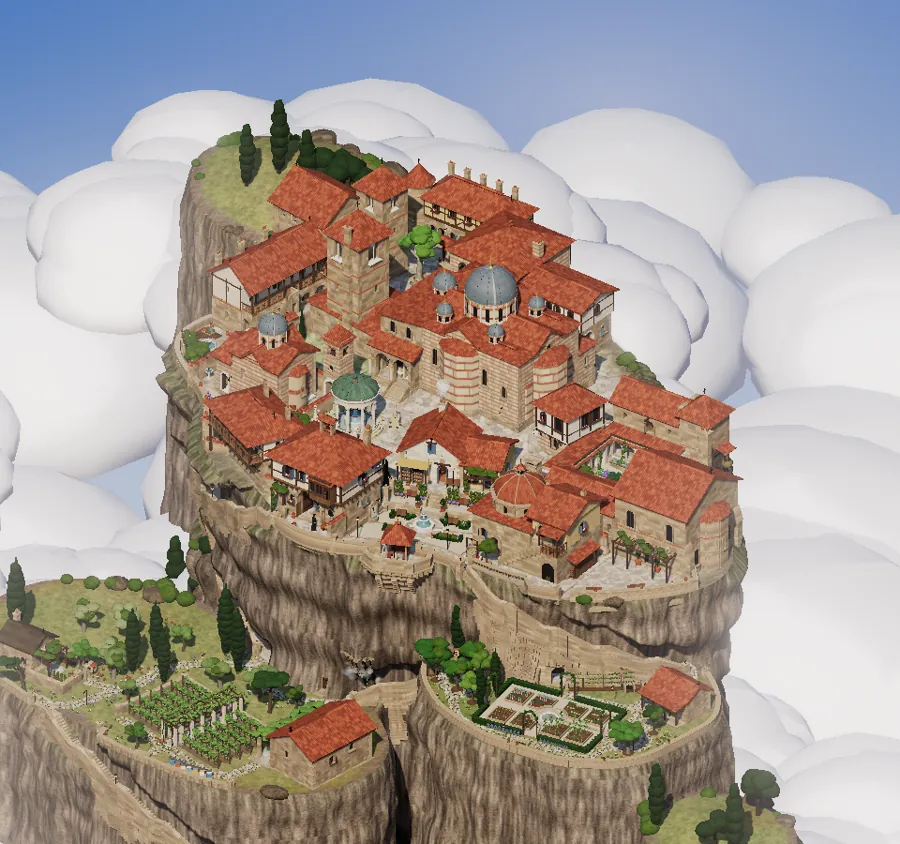
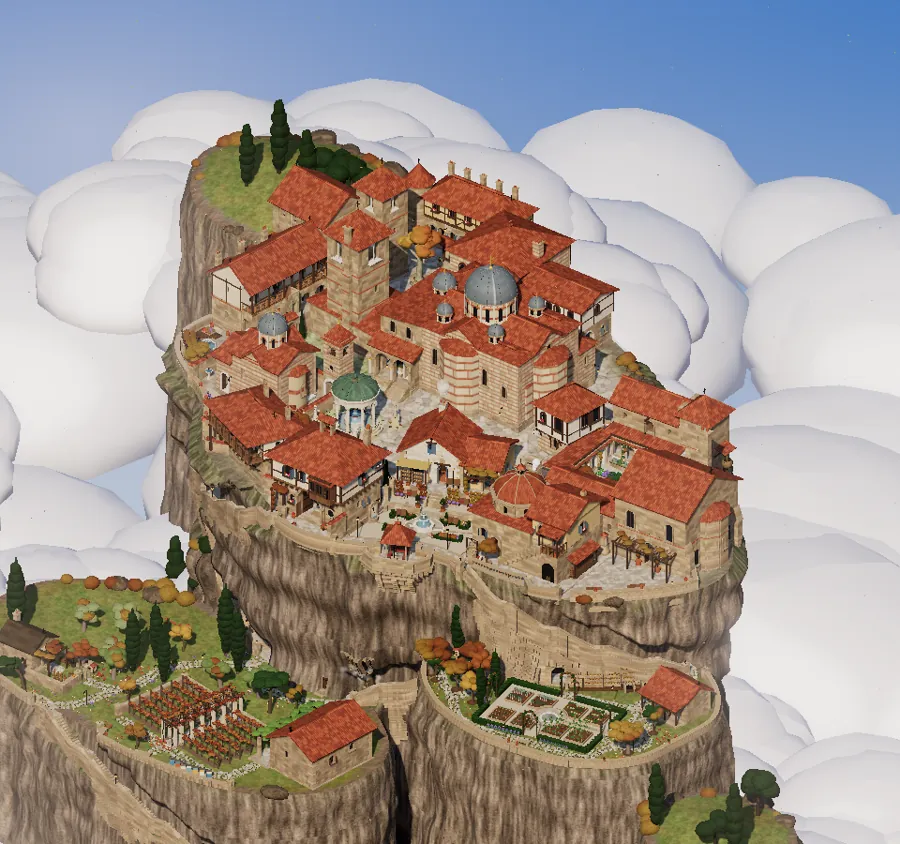
The whole rock shows the season. The broadleaves turn and fall, snow lies on the roofs and the domes, and the almonds blossom. The moon keeps the same twenty-eight days: dark in the pressing, on the tenth day, and full on the eve of Pascha. It rises later each night, so some nights have only stars. Each day has its own weather, the same for every guest.
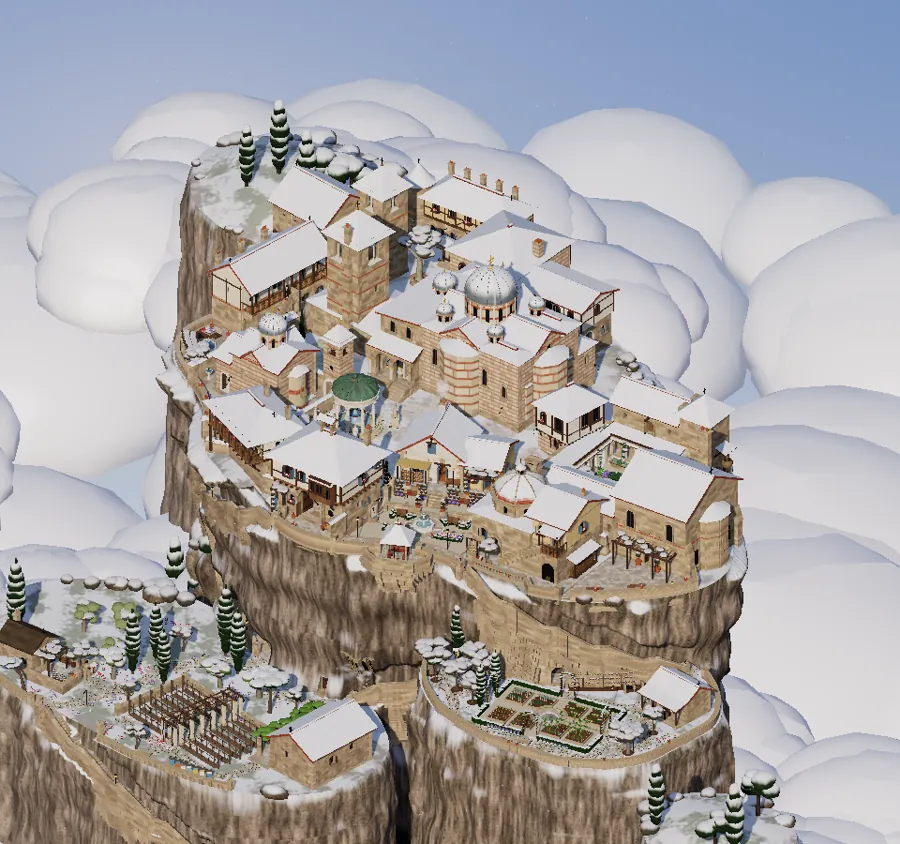
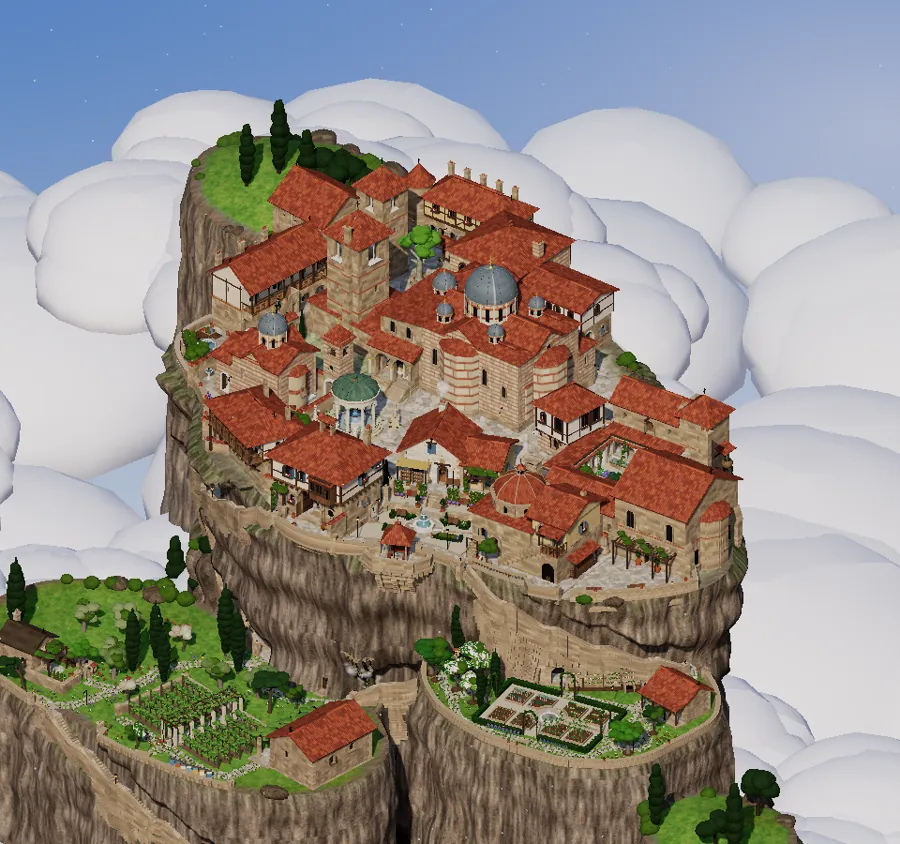
In the house, at this hour
The vineyard
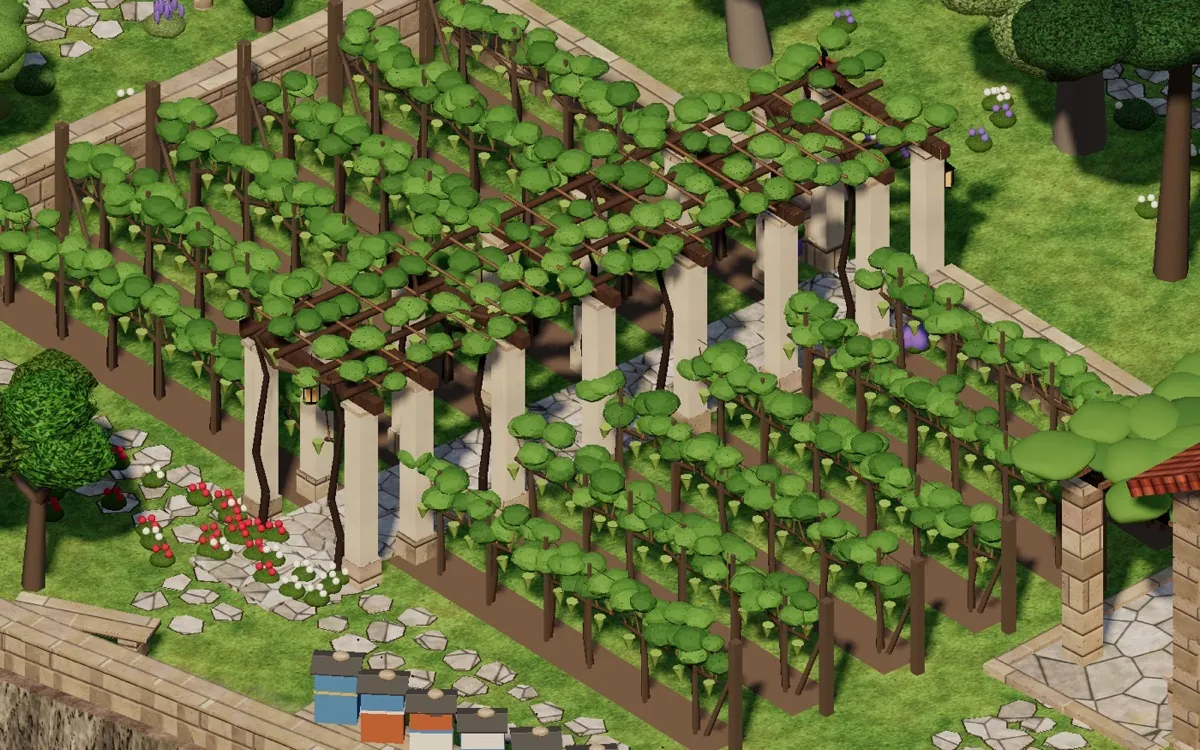
Six rows either side of the vine walk, from the shrine of St Tryphon to a stone bench on the rim. The vines show the season.
Stand there now ›