The first essay
The ascent
A house on a pillar of rock has one question before all others: how does anyone get up?
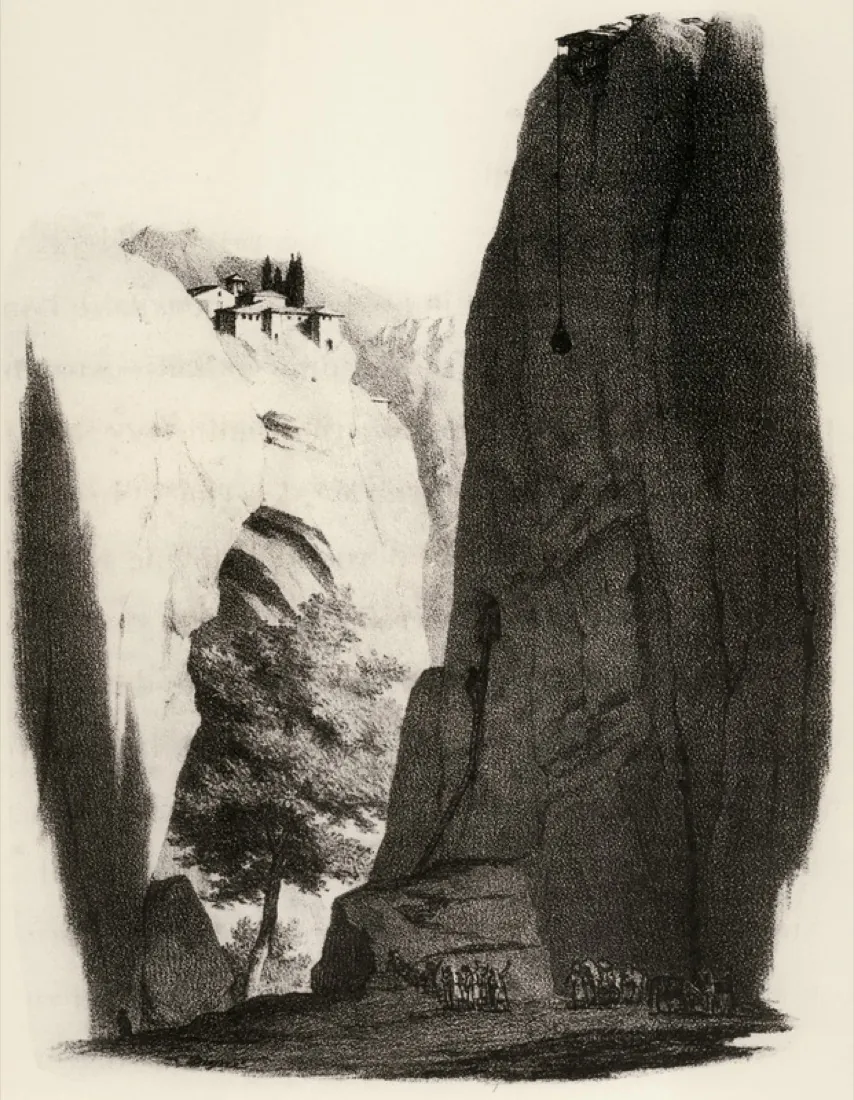
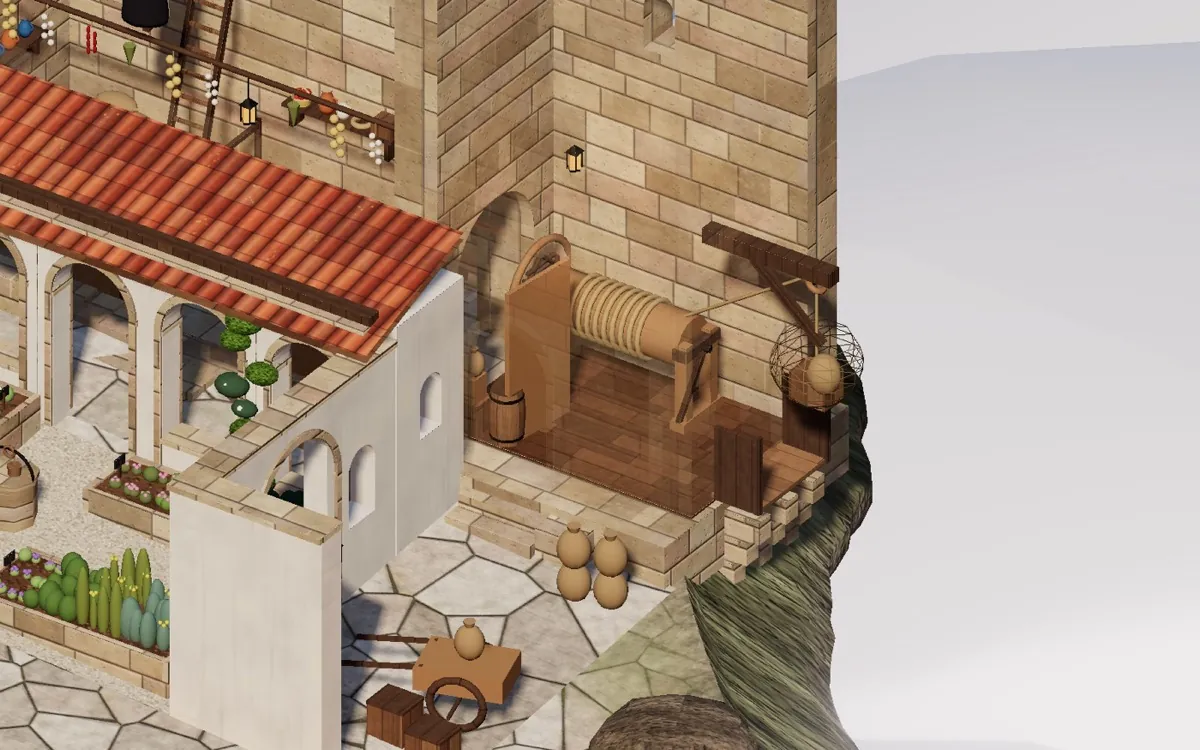
In the Sky Monastery the answer hangs over the east rim. The winch tower stands out past the edge of the rock, and in its upper room is the great windlass of the stores: a drum as thick as a man, turned by a wheel taller than one. What the house cannot grow comes up forty-six metres of rope in the net, and out of the hoist door there is nothing but air.
The net was not our invention. It is in the books of the travellers who went to Meteora before there were roads to it, and the best of them on this matter is Robert Curzon, who came hunting manuscripts and published what befell him in 1849.
In the house, at this hour
The winch tower
Stand in the winch room beside the drum, look out of the hoist door, and see who is at work in the stores below.
Stand there now ›A leg of mutton on a bottle-jack
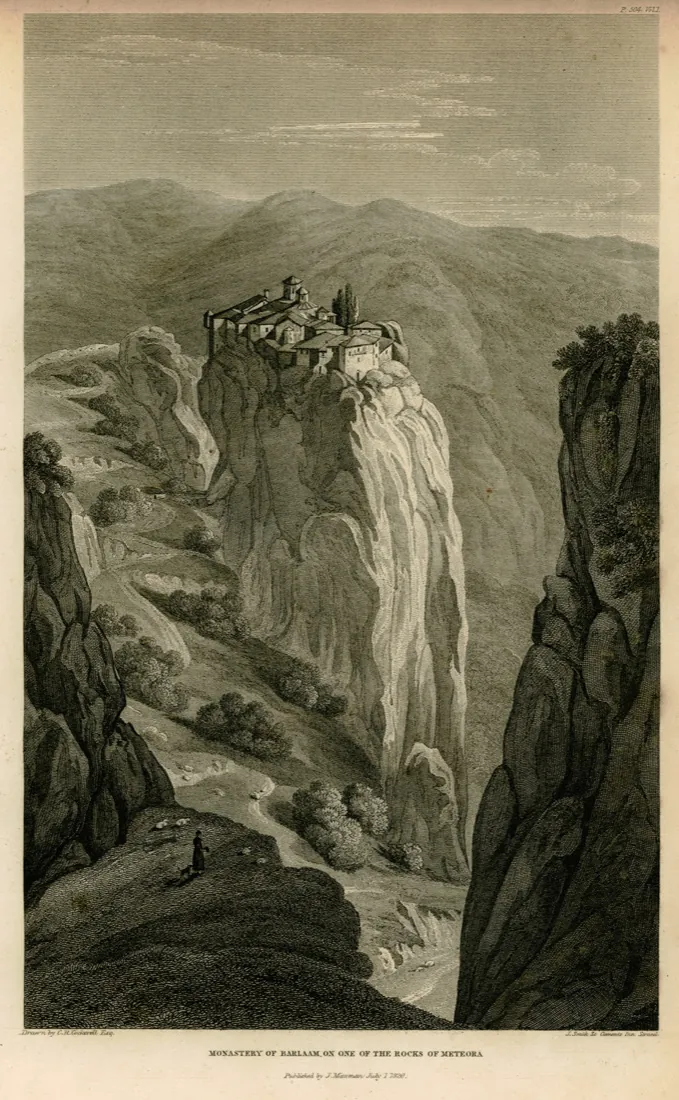
Curzon reached the foot of the monastery of Barlaam with an escort that did not please the monk at the door above. At length a thin cord came down, and he tied to it a letter of introduction he had brought from Corfu. After some delay a much larger rope followed, with a hook at its end and a strong net on the hook. His two servants sat down on the net and went first.
“The four corners being attached to the hook, a signal was made, and they began slowly ascending into the air, twisting round and round like a leg of mutton hanging to a bottle-jack. The rope was old and mended, and the height from the ground to the door above was, we afterwards learned, 37 fathoms, or 222 feet.”
At the top he watched two stout monks reach out of the door and pull the servants in by main force, there being, he noted, no contrivance like a turning-crane to bring them nearer the landing. The whole business looked so dangerous that he made up his mind to climb instead.
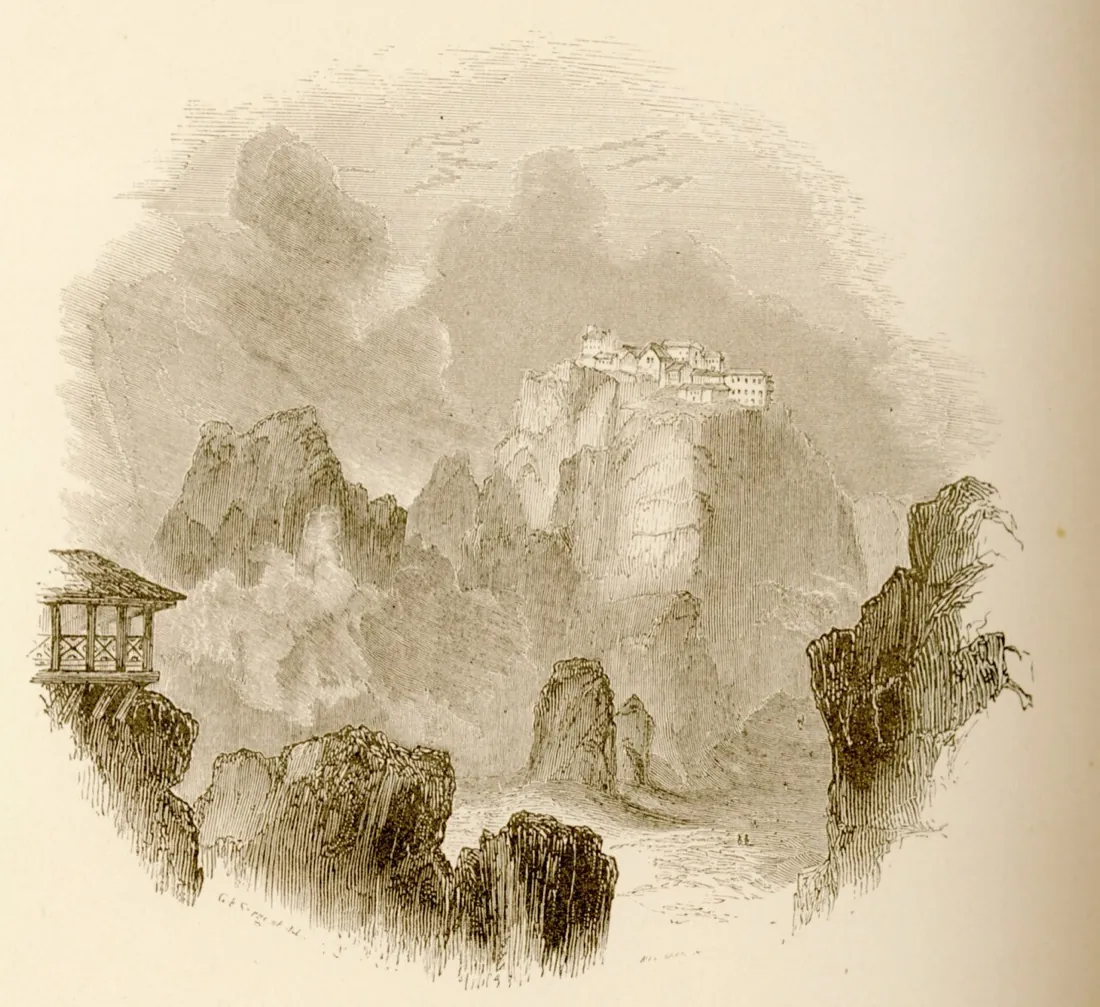
Ten or twelve at the bars
Going down, he had no choice. The monks and the abbot gathered in the room where the capstan stood, and ten or twelve of them took their places at the bars. The net was spread on the floor; he sat down on it cross-legged; the four corners were gathered over his head and hooked to the rope. A few steps round by the monks lifted him off the floor and, in his words, launched him out of the door right into the sky. The abbot and another monk leaned out to steady the swinging, and he was let down slowly and gently to the ground.
He lists what stood on Barlaam's summit, an acre and a half of it: the church and a smaller chapel, the refectory, the kitchen, the tower of the windlass, and the separate buildings where the monks lived, of whom there were then only fourteen. The Sky Monastery's rock carries the same things.
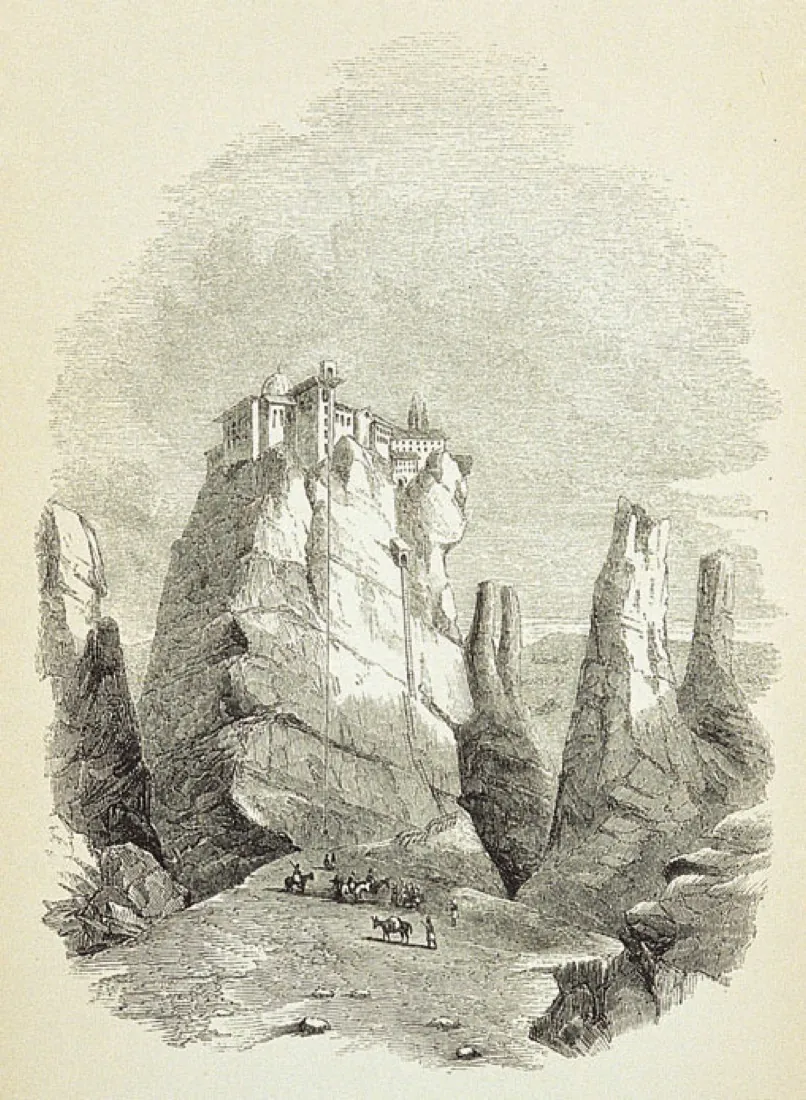
The same day he went on to the great monastery. He fired a gun at the foot of the precipice, long-bearded monks looked him over from above, and a rope with a net came down about twenty-five fathoms. That is a hundred and fifty feet, or very nearly the forty-six metres the Sky Monastery's net travels.
“I was lugged in at the window by two of the strongest of the brethren, and after having been dragged along the floor and unpacked, I was presented to the admiring gaze of the whole reverend community, who were assembled round the capstan.”
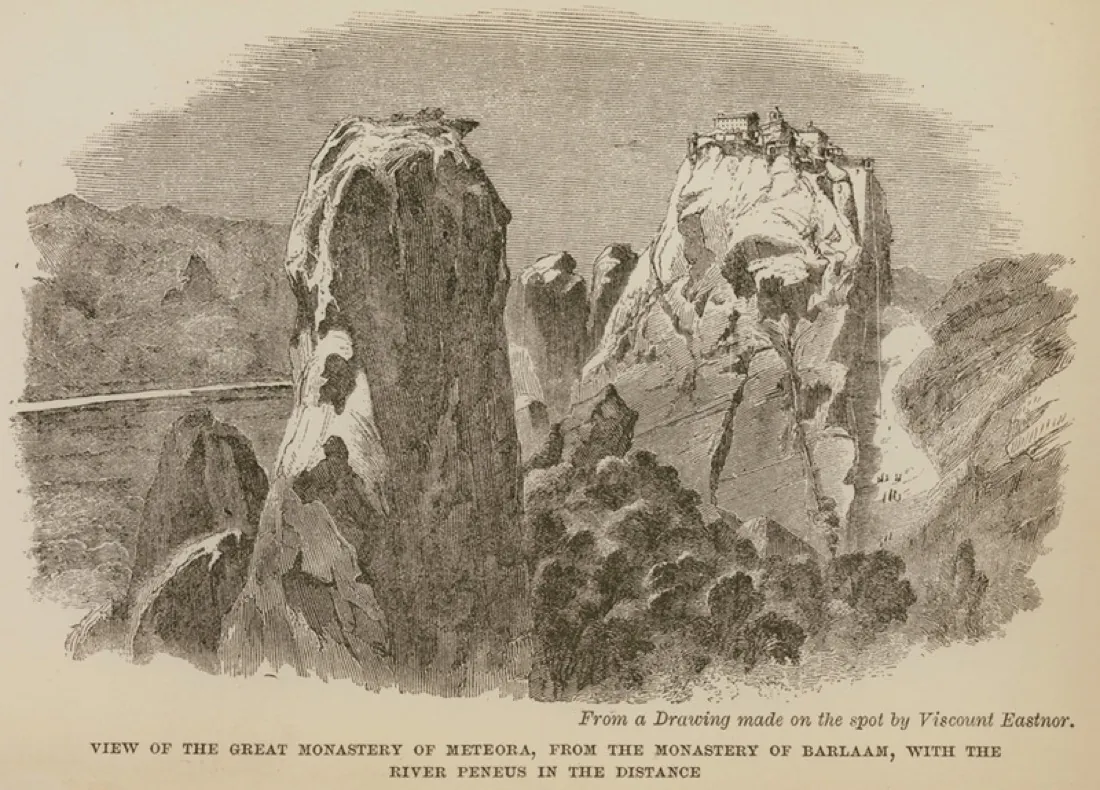
And the stair
Guests of the Sky Monastery are spared the net. They come up a stair cut down the face of the cliff, to a gatehouse at its head where every arrival stops first at the icon of the Mother of God, keeper of the gate. The porter keeps water and bread at his window for those who have climbed. The windlass is left to the flour, the oil and the salt.
At Meteora the nets gave way in the 1920s, when steps were cut into the rock and the houses were joined to the plateau beside them by a bridge. It is by those steps that the monasteries are reached today.
In the house, at this hour
The great gate
Arrive as a guest does: in the gate passage, before the icon, with the porter's window at your side.
Stand there now ›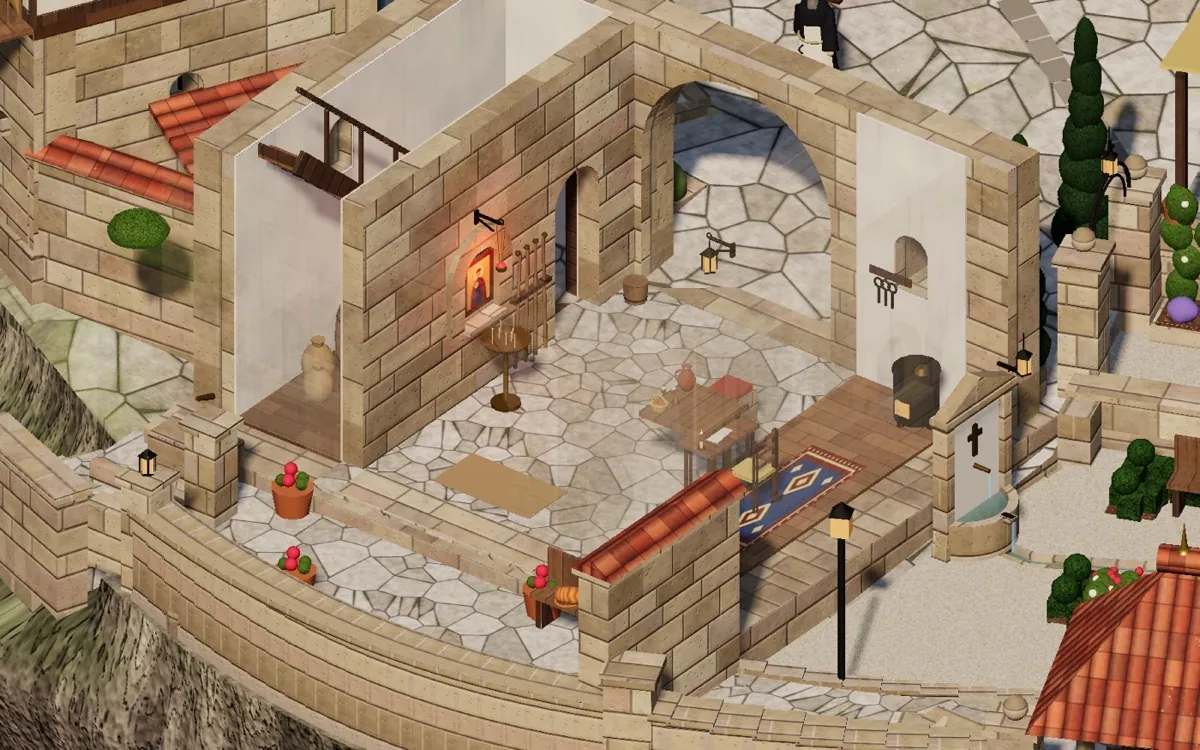
What is invented. The Broad Rock, its winch tower and its forty-six metres belong to the Sky Monastery. The net, the hook, the capstan and the monks at its bars are Curzon's, as he saw them at Barlaam and the great monastery.
Where this comes from. Robert Curzon, Visits to Monasteries in the Levant (London, 1849), chapters XIX and XX, read in the public-domain scan at the Internet Archive. Plates from Curzon; T. S. Hughes (1820); Louis Dupré (1827); and Christopher Wordsworth's Greece (edition of 1882), by way of Wikimedia Commons. The cutting of the steps in the 1920s is from the article on Meteora at Wikipedia.
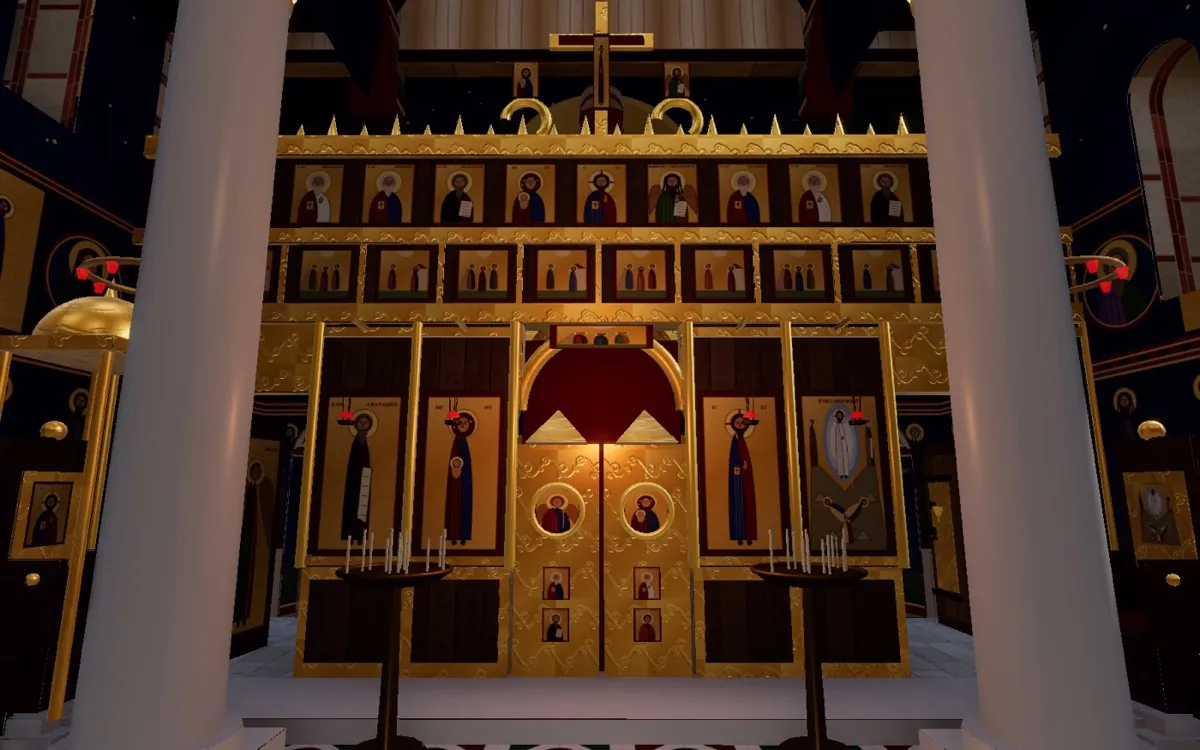 The next essayThe church ›Four columns for the Evangelists, a dome for heaven, and the terrors kept to the porch.